
At INTO, nature has always been an important source of inspiration. We want to offer our customers not only Nordic tranquillity, but also the experience of being close to nature.
During the summer, our CEO Jari Inkinen went to recharge his batteries and find inspiration in Finnish Lapland. Besides his family, Jari's favourite things are fishing and hiking in nature. When you spend time hundreds of kilometres away from the nearest settlement, you learn a thing or two about silence and what the human mind needs to be able to concentrate.
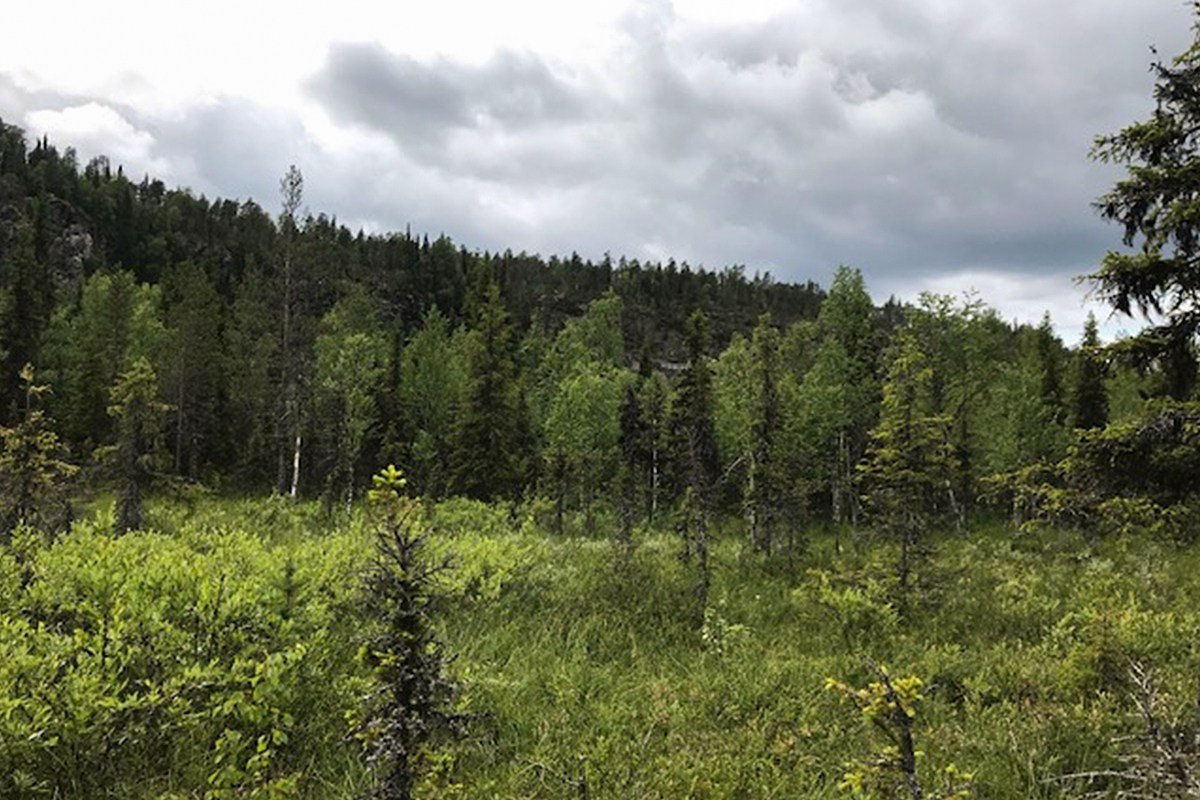
Total silence is not essential for concentration
Total silence is too much for the human mind. The mind needs external stimulation, and if it doesn't get it, the mind starts to create it. Orfield Laboratories Inc in Minnesota is known for being the quietest place in the world. It's so quiet that sound levels are measured in negative decibels (-9.4 dBA). Of course, you shouldn't aim for anything so extreme. Anything less will do for concentration.
For example, let's take a scenario where you need to focus on your work in a café. However, there are people at the next table talking and laughing with each other. Even if you don't try to listen, you'll still pick up words here and there in their conversation. Your brain is trying to make sense of the conversation, to put the pieces together, to make sense of the pattern. It's hard to concentrate. But as soon as the people at the next table are talking to each other in a language you don't understand, your brain stops rationalising and you're able to focus.
If you go to the other extreme, for example to the quietest room in the world at Orfield Laboratories, you start to focus on any sound. Steven Orfield, founder of the laboratory, describes the effect as follows:
”When it's quiet, the ears adapt. The quieter the room, the more you hear. You hear your heart beating, maybe you hear your lungs, your breathing, you hear your stomach or your own blood vessels. In a silent chamber, you become a voice.”
What matters for concentration is not complete silence, but that the soundscape is flat and the brain does not look for anomalies or patterns. For example, the background noise of the ventilation in a room provides a stimulus to the brain without interrupting the thinking process. However, if the ventilation includes, for example, a fan unit that clicks at certain intervals, that click will almost certainly break concentration. The brain starts counting the seconds between clicks, wondering if the clicks have a purpose, a pattern, when they happen. The brain wants to anticipate.
Similarly, a broadcast from an open radio is almost guaranteed to attract attention. The brain tries to understand what is happening, what is going to be said next, in an attempt to anticipate where things are going.
For concentration in quiet rooms, the so-called oppressive silence is not a sensible goal, but a sound environment that supports concentration. In nature, this soundscape often consists of the hum of the wind, the splash of water or the steady chirping of birds. When the soundscape is steady and repetitive, the human mind is calmed.
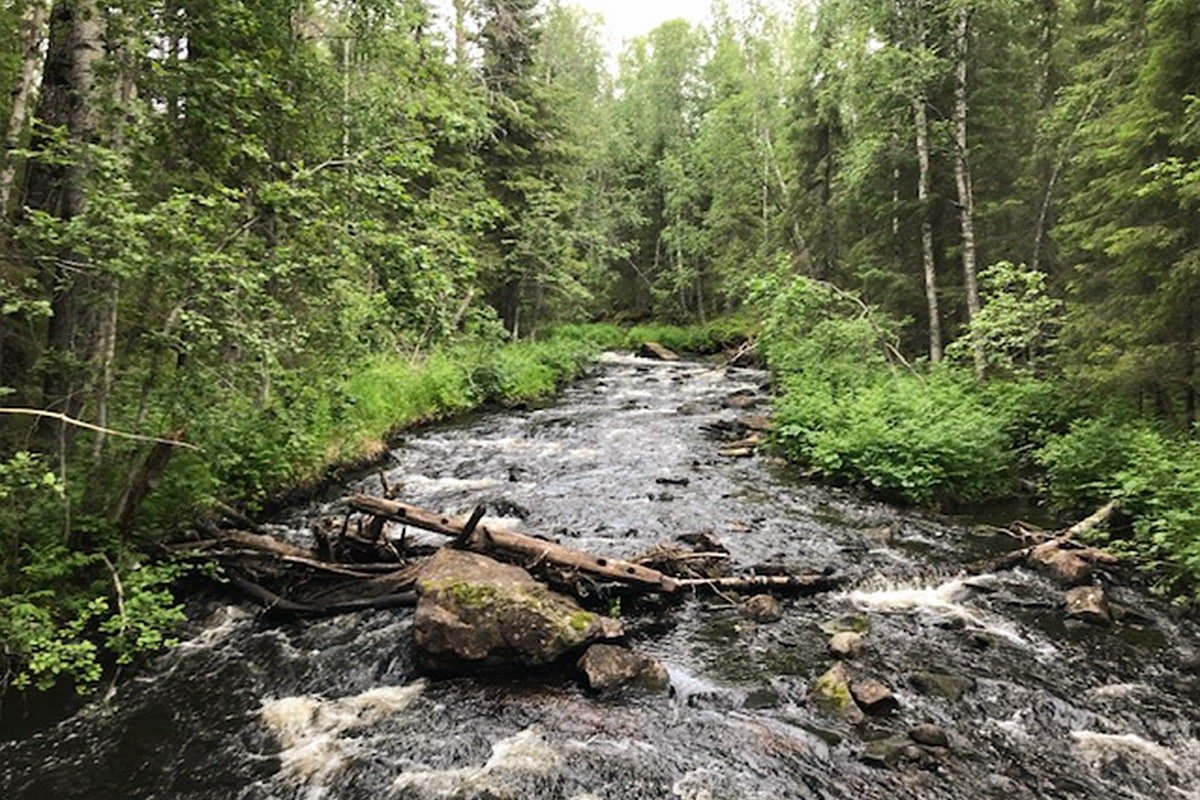
Concentration is also affected by privacy and a sense of security.
The experience of privacy and security is influenced by a private, quiet space and visual protection. We all know how easily your concentration can be broken when someone is standing behind you reading an email you've just written. Or if you're on a private call and someone in the next room is shouting back as if they're standing in the same room as you.
When talking about room acoustics, we often refer to the speech transmission index (STI) value. In its shortest form, this value describes the intelligibility of speech. When choosing telephone booths and other quiet support spaces such as conference and meeting rooms, it is always worth looking at the speech transmission index of the space. This often tells you more about the sound environment of the room than individual sound attenuation values (decibels).
When measuring the speech transmission index of modular conference rooms and telephone booths, ”low” is the target value. If the value is low, speech intelligibility outside the room is also low, meaning that private conversations and negotiations can take place in the room without the person outside the room being able to understand what is being said. You can read more about STI, decibels and room acoustics here.
Nature has inspired not only stillness and concentration, but is also strongly present in the design language of our products.
For example, the undulating design of the FOCUS workstation is inspired by the undulation of beach cliffs, while the POINT CUP sofa is inspired by the roundness of coal cherries. The angular shape of our POD rooms is inspired by the angularity of rocks and ice shelves as nature shaped them through the cycles of the seasons over thousands of years. This angularity gives our quiet rooms a timelessness that makes them fit in with their surroundings even after decades.

The last of the authors are now returning to work from their summer holidays. We hope that, like our CEO, everyone has had time to recharge their batteries during the holidays and enjoy the peace and quiet of nature and the stress-free summer.

 Finnish
  English
  German